The History of Tavla: From a Byzantine Emperor’s Bad Roll to the Turkish Café
Also available in: Türkçe · Deutsch
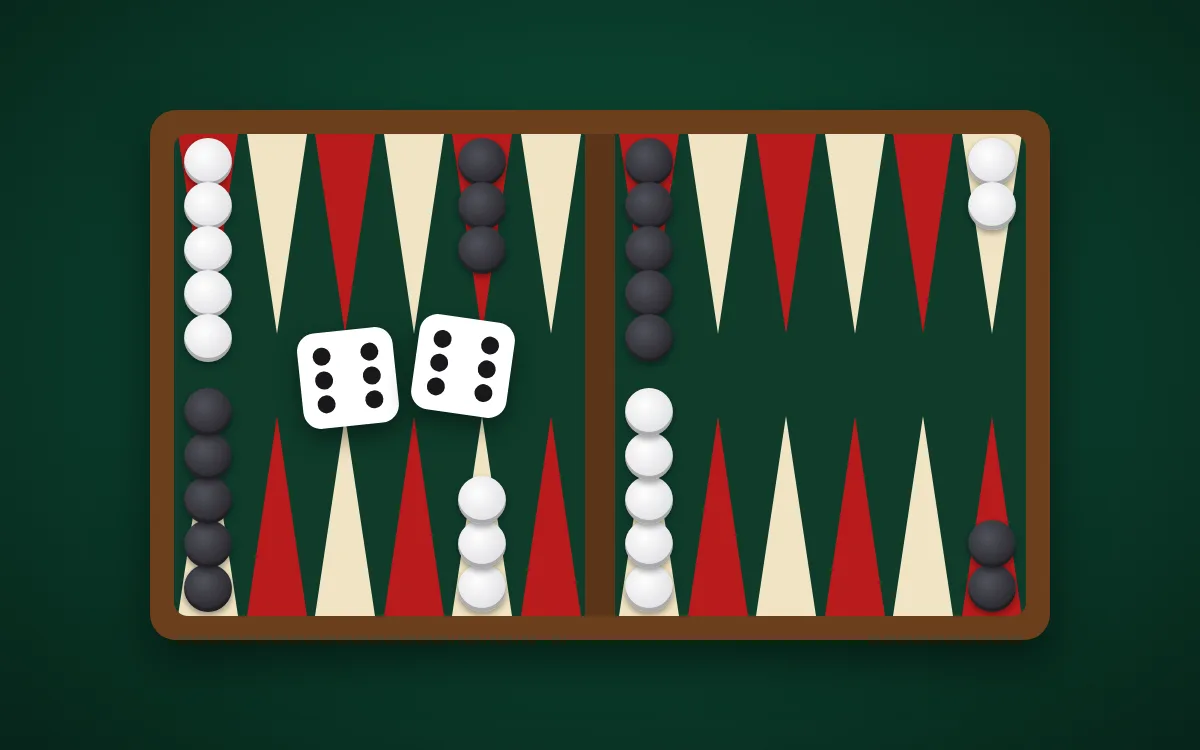
Tavla is today’s Turkish member of a game family thousands of years old. From an emperor’s ruinous roll recorded in verse to the Persian numbers Turkish players still call out, here is its history with sources.
Listen to a game of tavla in Turkey and you will hear Persian numbers. Players call double six *düşeş* and double two *dubara*; the name of the board comes from Italian and the word for a gammon from Arabic. The game’s own vocabulary is a map of the routes it travelled. This post tells tavla’s history using what the sources support and labelling legends as legends.
Is tavla really 5,000 years old?
The most repeated line online is that backgammon, and with it tavla, is 5,000 years old. The claim usually rests on the excavation of Shahr-e Sukhteh, the "Burnt City" in Iran, where a board, dice and 60 pieces dated to around 3000 BC were found. But the board’s fields are drawn as the coils of a snake, and the game’s rules are unknown. It was certainly an early dice and race game; that it was backgammon is not proven.
Historians call the family tavla belongs to the "tables" games: two dice, checkers moving in opposite directions around a board, and the right to hit a lone opposing checker. The oldest member of this family whose rules can be traced in documents is the tabula of the Roman and Byzantine world.
Byzantine tabula: an emperor’s bad roll
What tells us how tabula was played is a poem. The sixth-century poet Agathias describes, in a short epigram, a game played by the Byzantine emperor Zeno, who reigned in the late fifth century. The poem lists where the checkers stand, then the emperor throws: 2, 6 and 5. The roll wrecks his position so badly that eight single checkers are suddenly left exposed. Agathias closes by noting that even a king could not escape the blind chance of the dice.
In the poem the game is called τάβλη (tabula), the ancestor of the Greek word *tavli*. The epigram gives the positions in such detail that scholars reconstructed much of the game’s rules from it. Any tavla player knows the feeling: one bad roll can turn a tidy position into a row of blots.
| Rule | Tabula | Tavla today |
|---|---|---|
| Dice | 3 dice | 2 dice |
| Start | Checkers enter from off the board | Checkers start in a fixed setup |
| Hitting a lone checker | Yes | Yes |
| Bearing off | Yes | Yes |
The Persian legend: nard and the vizier Bozorgmehr
In Iran the game of this family is known as nard. A Middle Persian text from the Sasanian period tells the story of chess and nard: an envoy from India challenges the Persian court to explain the secret of chess. The vizier Bozorgmehr (Wuzurgmihr) solves the puzzle, then invents a new game in return, which the Indian sages cannot explain. According to the text, the game was named in honour of Ardashir, the first Sasanian king, and the word "nard" comes from that name.
This is a legend, and not the only one: Ferdowsi’s *Shahnameh* credits a different court scholar, Borzuya. Persian tradition places the invention of nard between the third and sixth centuries AD. What is certain is that nard was a respected court game mentioned alongside chess, and texts read the board and dice as symbols of the heavens and of fate.
Tables in Europe, backgammon in England
The family reached Europe largely through the Arab world, entering Spain and Italy around the year 1000. In medieval Europe it was known as "tables". The book of games commissioned by King Alfonso X of Castile in 1283, the *Libro de los juegos*, covers tables games alongside chess and dice.
The name "backgammon" first appears in English in the 1640s. It most likely comes from "back" and the Middle English *gamen* (game), though even that is not certain. The doubling cube, today the signature of the international game, is much younger: it appeared in the United States in the 1920s, probably in New York gaming clubs; who invented it is unknown. The game enjoyed a new boom in the US and Europe from the mid-1960s, with tournaments.
Turkish tavla never adopted that twentieth-century addition: there is no doubling cube, and a game is worth at most 2 points (a gammon, *mars* in Turkish). The full Turkish rules are in our how to play backgammon (tavla) guide, and how the two rule sets compare is covered in Turkish backgammon rules.
The language of tavla: Persian numbers at a Turkish board
Turkish tavla words show clearly that the game passed through several cultures. The origins below come from the dictionary of the Turkish Language Association:
| Word | Meaning | Origin |
|---|---|---|
| Tavla | The game and its board | Italian tavola |
| Düşeş | Double six | Persian dū + şeş (two + six) |
| Dubara | Double two | Persian dū + bāre |
| Hepyek | Double one | Persian hep + yek (yek = one) |
| Dübeş | Double five | Persian dū + Turkish beş |
| Cihar | Four | Persian çehār |
| Mars | Winning before the opponent bears off (gammon) | Arabic mars |
The most charming example is dübeş: Persian *dü* (two) and Turkish *beş* (five) side by side in a single word, a small record of two languages mixing at the board over generations. The name of the board itself, from Italian, carries the trace of a game that travelled around the Mediterranean; the same Latin root, *tabula*, lives on in Greek *tavli*.
Where is tavla played today?
Today tavla, under one name or another, is one of the most widespread games from Turkey and Greece to Iran and the Arab world. The board is the same everywhere; the rules and scoring change in small ways from region to region. In Turkey the game is played the Turkish way, without a doubling cube. To keep that tradition going online, you can take a seat at a Turkish-rules table from our play backgammon page.
Myth: Tavla is proven to be 5,000 years old.
Fact: The Burnt City board dated to around 3000 BC is a snake-patterned game with unknown rules. The oldest relative whose rules are documented is the Roman and Byzantine tabula.
Myth: "Tavla" is an originally Turkish word.
Fact: According to the Turkish Language Association it comes from Italian tavola.
Myth: Dice calls like düşeş and dubara are Turkish.
Fact: Most come from Persian numbers: dü (two), şeş (six), yek (one). Dübeş mixes Persian and Turkish.
Myth: The doubling cube is one of the oldest parts of the game.
Fact: It appeared in the United States in the 1920s. Turkish tavla never adopted it.
Next time you roll double six, remember that you are saying two Persian numbers, and that the game you are playing once upset a Byzantine emperor. The board has not changed, and the dice still favour no one.
Sources
- Anthologia Graeca: Agathias, Palatine Anthology 9.482 (Zeno’s game of tabula)
- Encyclopaedia Iranica: Wizārišn ī čatrang ud nihišn ī nēw-ardaxšīr (the chess and nard text)
- Cambridge University Press: Backgammon and cosmology at the Sasanian court (BSOAS)
- Wikipedia: Tables game (tabula, nard, spread to Europe, Burnt City find)
- bkgm.com: Chris Bray, Backgammon History (first record of the name, doubling cube)
- Türk Dil Kurumu: Güncel Türkçe Sözlük (Turkish dictionary: tavla, düşeş, dubara, hepyek, dübeş, mars)