Pisti, the Turkish Card Game: Its Relatives Xeri and Basra, and the Story of the Cards
Also available in: Türkçe · Deutsch
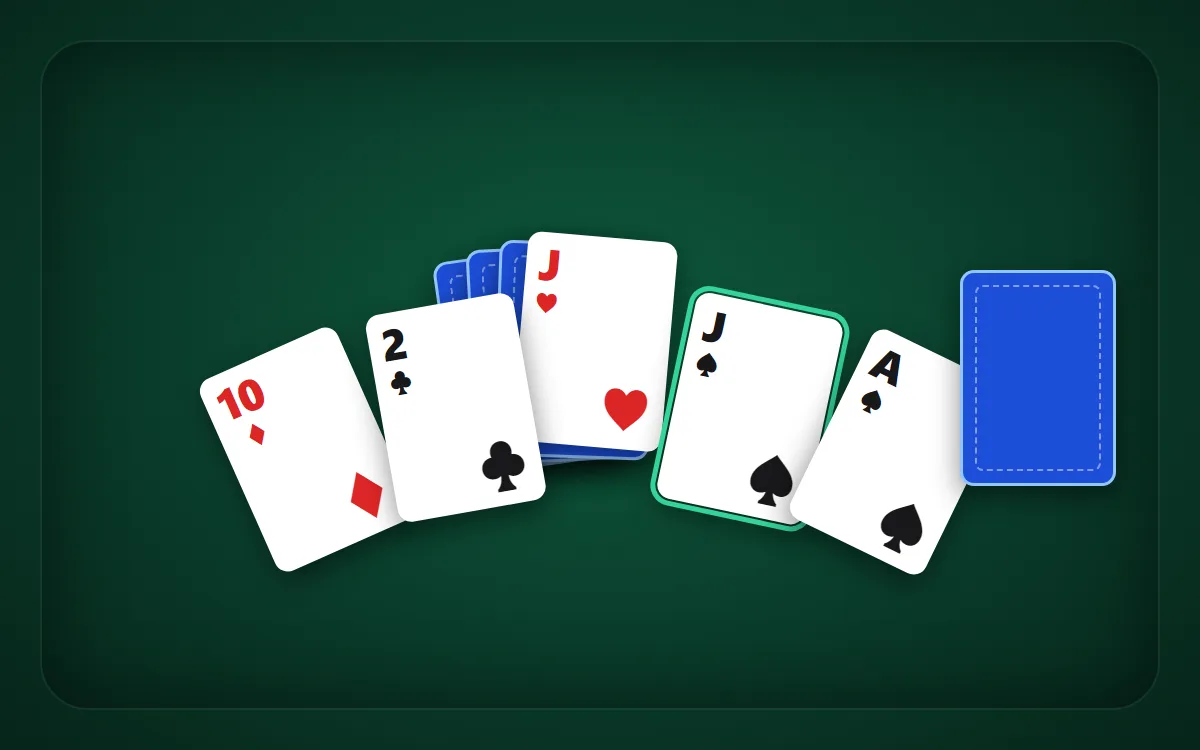
Nobody can say when or where pisti was first played. Its relatives, its name and the Turkish names of the cards still tell an interesting story. Here is what is known and what is not.
Almost everyone in Turkey knows pisti (written *pişti* in Turkish), yet the game has no birth certificate. We found no reference that dates its first appearance, and the precise origin stories circulating online cite no sources. What we do have are its relatives, its name and the Turkish names of the cards, and together they draw a clear map of the eastern Mediterranean card table. The rules themselves are in our how to play pisti guide.
Which family does pisti belong to?
Card game historians place pisti among the fishing games. In these games face-up cards lie on the table; if the card you play matches one of them, you "fish" it out, otherwise it joins the layout. The family is spread around the world: Scopa in Italy, Casino in English-speaking countries, Pâsur in Iran, Ronda in Morocco, Go-Stop in Korea and most Japanese flower-card (hanafuda) games.
Within the family pisti belongs to a distinct branch: there is only a single pile on the table and only its top card matters. According to Pagat, this type is played in Turkey, Albania and a few other places. Besides pisti it includes Greek Xeri, Mitaines and Hockey in Canada, and a children’s game called "Money" in Jordan, Egypt and Syria. Pagat makes no claim about where the family as a whole began, and neither do we.
Its closest relatives: Xeri and Basra
Xeri is a two-player Greek game whose play, in Pagat’s words, is very similar to pisti, though the scoring differs. Capturing a lone card with a matching one is called a *xeri*, Greek for "dry" or "plain"; like a pisti it is worth 10 points, and capturing a lone jack with a jack scores 20. Some Greek players count the jack xeri as 25.
Basra is popular in Cyprus, Egypt, Lebanon and elsewhere in the Middle East. The name is Arabic and passed into Greek as *bastra*. In Basra several face-up cards lie on the table and one play can capture more than one card, unlike pisti’s single pile. Wikipedia, citing card game writer David Parlett’s Oxford guide, describes pisti as a development of basra. That is a statement about kinship, not dated evidence of which game came first.
| Rule | Pisti | Xeri | Basra |
|---|---|---|---|
| Table layout | Single pile | Single pile | Several cards |
| Lone card captured | 10 points | 10 points | 10 points |
| Jack on a lone jack | 20 points | 20 (sometimes 25) | Varies |
| Card points per hand | 16 | 25 | Varies |
The scoring difference is telling. In Xeri every ace, king, queen, jack and ten scores, so the cards add up to 25. In pisti only the aces, the jacks, the two of clubs and the ten of diamonds score, plus 3 points for most cards, 16 in total. Our game uses this Turkish scoring.
What does "pisti" mean?
Pagat links the word to cooked, describing the capture of a pile that holds a single card. The Turkish Language Association’s dictionary gives no origin for the word, but lists two synonyms: pişpirik and pastra, the latter of Greek origin. The likeness between Turkish *pastra* and Greek *bastra* is striking and hints at a game that moved between languages around the eastern Mediterranean. We found no source that traces the path step by step, so we record it as an interesting clue rather than a fact.
Where did the playing cards come from?
Pisti’s own origin may be unknown, but the history of the cards it is played with is better documented. Topkapı Palace in Istanbul holds a Mamluk deck identified by the scholar Leo Mayer in the 1930s. It is thought to date from the fifteenth or early sixteenth century; 47 cards survive from a pack of four suits of fourteen cards each: coins, cups, swords and staves. The cards show no human figures.
According to The World of Playing Cards, playing cards reached Europe in the 1370s, and Mamluk packs are the most convincing candidates for the ancestors of European decks, though the author adds that we may never know for sure. The 52-card deck used for pisti today is the European form that came out of that long journey, and the Turkish names of the cards still show it.
Turkish names of the cards
If you play pisti with Turkish friends, these are the words you will hear. The origins below are from the Turkish Language Association’s dictionary:
| Turkish | English | Origin |
|---|---|---|
| Maça | Spades | Italian mazza |
| Karo | Diamonds | French carreau |
| Kupa | Hearts | Greek |
| Papaz | King | Greek; also called *rua*, from French *roi* |
| Kız | Queen | Turkish, literally "girl" |
| Vale | Jack | French valet |
| As | Ace | French as |
Turkish took its card vocabulary from three languages: Italian, French and Greek. Several cards even have two names, such as *papaz* and *rua* for the king, a reminder of port cities where people speaking different languages sat at the same table.
Myth: We know when and where pisti was invented.
Fact: We do not. Card game references describe its rules and relatives, but none gives a dated origin.
Myth: Pisti, Xeri and Basra are the same game.
Fact: They are relatives, not the same game. Pisti and Xeri use a single pile and score differently; Basra has several face-up cards on the table.
Myth: A jack pisti is always worth 20.
Fact: In our game and most Xeri games it is 20, but some Greek players count 25, and Basra rules vary by region.
Next time you sweep the pile with the jack of spades, remember that the card’s Turkish name is French, its suit name Italian, and the game itself comes from the shared card table of the eastern Mediterranean. To play pisti the Turkish way, one-on-one or in pairs, open a table from our play pisti page.
Sources
- Pagat: Pişti (rules, meaning of the name)
- Pagat: Xeri (the Greek relative)
- Pagat: Fishing games (the family)
- Wikipedia: Bastra (Basra: name, regions)
- The World of Playing Cards: Mamluk Cards and the Making of the European Deck
- Türk Dil Kurumu: Güncel Türkçe Sözlük (Turkish dictionary: pişti, pastra, maça, karo, kupa, papaz, vale, as)